
The Burial of Douglas Howard - 11 December 1608
thedudleywomen
Dec 11, 2025
7 min read
Updated: Aug 5

At the beginning of December 1608, Elizabethan courtier Douglas Howard, Lady Sheffield, died, at approximately sixty-five years old.
Douglas was the eldest daughter of William Howard, 1st Baron Howard of Effingham. She was born in c.1542-3, not long after the release of her parents from the Tower of London; both had been arrested and imprisoned in December 1541, along with other Howard family members, and convicted of charges of misprision, accused of being aware of their kinswoman Queen Katherine Howard's adultery and failing to intervene or inform the appropriate authorities. After his release, her parents were able to rehabilitate themselves, with her father, then William, Lord Howard, aligning himself with the rising stars of the royal court, Edward Seymour and John Dudley, leading to his admission to the Privy Council in 1553 (Lee, 1891; Russell, 2017).
Douglas was the first of her sisters who joined the household of Elizabeth I, initially as a Maid of Honour in January 1559, shortly after the queen's accession to the throne. In October 1560, Douglas married her first husband, John Sheffield, 2nd Baron Sheffield, and left court to set up her household. The couple had two surviving children, before Sheffield died prematurely of 'poor health' in 1568, aged only 30 years old, following which Douglas returned to court (Folgerpedia [1], 2025).
Douglas was known to have engaged in an affair with Robert Dudley, 1st Earl of Leicester after her return to court in the early 1570s. Whilst Leicester still remained the 'favourite' of Elizabeth I, the queen was reportedly aware and tolerant of their relationship, not viewing Douglas as a credible rival or threat. Douglas gave birth in August 1574 to a son, who was named after his father, whose paternity he acknowledged: Robert Dudley. However, claims of secret marriage contract between the pair was rejected, with Leicester referring to his son, also known as 'Robin Sheffield' as "my base son" and "the badge of my sin". Whilst continuing to be heavily involved in decisions regarding his son's upbringing, the relationship with Douglas came to a end by 1576, Leicester having commenced a relationship with the still-married Lettice Knollys, Countess of Essex, who he would go on to marry in September 1578 (Wilson, 1981; Tallis, 2017).
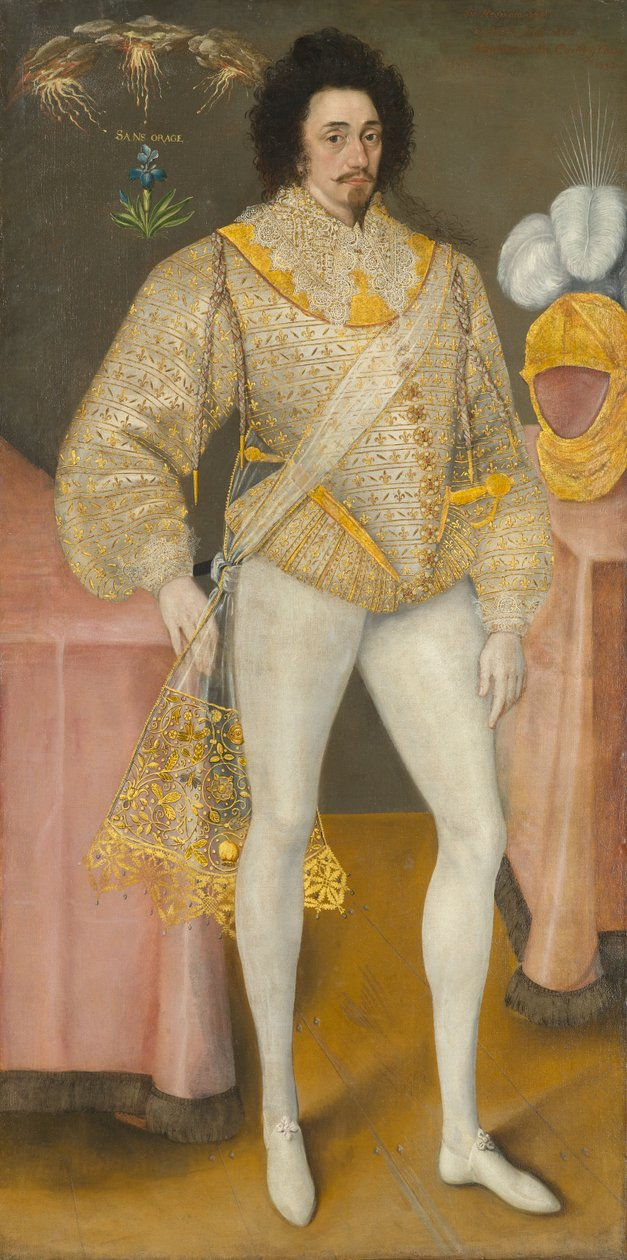
Douglas married for her final time in November 1578, in a clandestine ceremony at her home in Blackfriars, London. Her groom was Edward Stafford, son of Sir William Stafford, the second husband of Mary Boleyn, and Lady Dorothy Stafford, Lady of the Privy Chamber and Queen's Bedchamber (Folgerpedia [1], 2025); History of Parliament (2025) describes Stafford as having "owed his career chiefly to his mother, who lay in the queen’s bedchamber for 40 years". Shortly after their marriage, in January 1580, Stafford was dispatched as a Special Ambassador to France; on his return to England the following month, Elizabeth I had learned of his marriage to Douglas; an inquiry was launched to explore the validity of the marriage, given rumours of a previous union between Douglas and Leicester, and Stafford himself was summoned for a 'dramatic interview' with the queen. It is important to note that the queen's motive behind this investigation appears to be challenging Leicester's subsequent marriage to Lettice Knollys, whom Elizabeth had banished from court (Gristwood, 2007; Folgerpedia [2], 2025).
Douglas initially accompanied her newly-knighted husband to Paris, when he was appointed the Ambassador to France in September 1583. It appears that the couple remained together in France for over five years, with Douglas establishing herself in the French court, before returning to England in August 1588, nine months before her husband's tenure was complete (Folgerpedia [1], 2025).

Douglas's past affair with Leicester resurfaced in February 1604, when Lettice Knollys, Dowager Countess of Leicester filed a bill in the Star Chamber in response her son's attempts to claim lands and titles associated with the Earldoms of Leicester and Warwick, alleging he was born from a legitimate union. Robin Sheffield claimed that his parents had entered into a secret marriage at Esher, Surrey in May 1573, thereby bringing into question the validity of Leicester and Lettice's subsequent marriage. After listening to witnesses, including Douglas and Stafford, who both provided written testimony in support of Robin, and reviewing of evidence, in May 1605, the Star Chamber ruled in Lettice's favour; they dismissed the claims of Douglas and her son, and found Lettice and Leicester's marriage to have been legal (Tallis, 2017; Oxford Authorship Site, 2025). The impact of the ruling on Douglas and her son was described as 'devastating' and humiliating, even though it was concluded that Robin Sheffield had not acted with malice in pursuing the suit. He left England in July 1605 with his mistress, Elizabeth Southwell, abandoning his wife and children, never to return. Douglas's husband, Sir Edward Stafford, "died suddenly" during proceedings, in February 1605, himself being buried at St. Margaret's Church, Westminster (Tallis, 2017; History of Parliament Online, 2025). Douglas reportedly died at her Westminster home, at the beginning of December 1608; it is unknown whether she was still residing in her late-husband's property in Cannon Row, or whether she had made another nearby residence her home. Her cause of death is unknown, although it appears to have been sudden or at least unexpected. When Douglas wrote her will on 14 September 1608, less than three months prior to her death, she commented that she was "in health of body and perfect. memory, yet considering the uncertainty of this my mortal life...we must set our houses in order before we die...I do here make and ordain this my last will and testament..." (Oxford Authorship Site, 2025).

In her will, Douglas set out her requests for the. burial of her body, which she described as "no better than the prison of my soul". She provided two options for burial, the final decision to be made by her son Edmund Sheffield, 3rd Baron Sheffield, and William Crashawe, a puritan preacher and executor of her will: for Douglas to be either buried "at [St Mary Magdalene Church] Reigate with my father and mother, or in the parish church of Westminster by my sister Dudley" (Oxford Authorship Site, 2025).
The final decision was made for Douglas to be buried at St Margaret's Church, the former Benedictine abbey church, dedicated to St Margaret of Antioch, which stands within the grounds of Westminster Abbey, having been rebuilt and consecrated in 1523. The church's parish records confirms the date of her burial, 11 December 1608: "The Lady Dugleys Sheaffeilde" (Burke, 1914, p.491). It is unknown whether Douglas's wishes for her burial service outlined in her will were implemented:: "that if it be possible it be in the daytime and that there be a sermon and alms given to the poor, but otherwise without pomp and with as little charge as may be". Douglas also made provisions for twenty pounds to be donated to the 'poor of the City of Westminster' in her will: "ten pounds to be distributed at my burial to the poor...that dwelt nearest unto me and best frequented the church, and the other ten pounds to be given to the stock of the poor of that said parish..." (Oxford Authorship Site, 2025; Westminster Abbey [1], 2025).



Comments