
The Death of Margaret St John, Countess of Bedford - 27 August 1562
thedudleywomen
Aug 27
10 min read
Updated: Aug 29
![Tomb effigy of Margaret St John, Countess of Bedford, Bedford Chapel, St Michael's Church, Chenies ©IanAWood [Flickr]](https://static.wixstatic.com/media/ed9b82_efa2e1cfab3648be8e78c00af471b3f9~mv2.jpg/v1/crop/x_70,y_0,w_897,h_829/fill/w_897,h_829,al_c,q_85,enc_auto/ed9b82_efa2e1cfab3648be8e78c00af471b3f9~mv2.jpg)
In the summer of 1562, Elizabeth I had been on the English throne for almost three years. Her government and household were now well established, with the young queen having made significant changes to both on her succession, intentionally surrounding herself with allies and Reformist supporters and sympathisers. Francis Russell, 2nd Earl of Bedford, was one of those quickly appointed to the Privy Council, with his wife, Margaret St John, Countess of Bedford, later appointed to the Royal Household, as a Lady of the Privy Chamber (Weir, 1999; Folgerpedia [1], 2025).
Margaret was a daughter of Sir John St John of Bletsoe, former Knight of the Body to Henry VIII, guardian of Mary Tudor and Chamberlain of Elizabeth Tudor's household, to his first wife Margaret Waldegrave. Margaret's second marriage, to Francis Russell, heir to the Earldom of Bedford, whose own career and fortune has been attributed to his father, John Russell, 1st Earl of Bedford's achievements, and their climb within royal society, brought opportunities to the young couple. Bedford was entrusted on multiple diplomat missions in the early years of Elizabeth's reign, including those related to Mary, Queen of Scots, which often took him away from his wife and young family, the couple having seven children who survived to adulthood (Wiffin, 1833; History of Parliament Online, 2025; History of Parliament Online, 2026).

Elizabeth's court would regularly move between the royal palaces which lined the River Thames - Greenwich, Whitehall, Richmond and Hampton Court - and Nonsuch in Surrey. For the weeks that the queen stayed in each residence, privy lodgings would be established, consisting of a Presence Chamber, Privy Chamber and Bedchamber. Her Privy Chamber, "the frontier between the Queen's public and private worlds" is where Elizabeth spent the majority of her time, surrounded by a select number of favoured ladies, conducting business, dining and entertaining. Seven women at one time served the queen in the Privy Chamber 'without wage', and it was to this position that Margaret was appointed (Whitelock, 2013, p.18). Her granddaughter, Lady Anne Clifford, Countess of Montgomery, Pembroke and Dorset later alleged that Margaret's eldest daughter, Anne Russell, also joined the queen's household at "a young age", with Borman (2009) also questioning the possibility of Anne being raised within the Elizabeth's household prior to her accession, later joining her mother as the youngest member of the Royal Household.
Since early June 1562, the Royal Court had been in residence at Greenwich Palace, one of Elizabeth's favoured palaces. That summer, the queen was predominantly preoccupied with discussions and planning regarding a prospective meeting in the autumn between herself and Mary, Queen of Scots. In addition to these negotiations, Elizabeth continued to receive multiple visitors, including French, German and Swedish ambassadors (Folgerpedia [2], 2025). Having given birth to her youngest child, Margaret, two years previously in July 1560, the Countess of Bedford had returned to court, and resumed her duties within the Royal Household and the queen's Privy Chamber. And it was at Greenwich during this busy summer period that Margaret appears to have contracted the disease which would claim her life: smallpox.

Smallpox was a highly infectious disease, which was virulent during the early years of Elizabeth's reign; in November 1562, English diplomat Sir Thomas Smith, described the spread of smallpox, in particular amongst the ladies in Elizabeth's household and at court, referring to the illness of Katherine Bertie, Dowager Duchess of Suffolk in February 1562, and Margaret's later death, stating "this disease is best acquainted with Duchesses, Marchionesses, and Countesses" (Weir, 1999; Folgerpedia [2], 2025).
Having a 30% mortality rate, predominantly due to liver or cardiovascular complications, smallpox was transmitted through the respiratory tract, by close contact with an infected or symptomatic individuals, or contact with infected skin lesions, contaminated clothing or bedding. Early symptoms of the disease included fever, fatigue, severe back pain, abdominal pain and vomiting; two or three days after experiencing these symptoms, smallpox's characteristic rash would appear,, beginning on the victim's face and hands, and spreading over their body, later developing into pustules that would ulcerate. Sore and oozing lesions would also develop in the mucous membrane - on the tongue, larynx, upper trachea and oesophagus, making speech, eating and rinking painful and difficult (National Library of Medicine, 2024; World Health Organization, 2024).

It was to Woburn, rather than to other Bedford properties, including Cheynes, that Margaret decided to retreat, when it was realised that she was exhibiting the symptoms of smallpox. Whilst the Buckinghamshire manor of Cheynes was closer to Greenwich, in 1562 this remained the primary family residence, including that of Margaret's youngest children; it is likely that she did not wish for the virulent disease to be transmitted to others, smallpox being having a higher mortality rate in infected children. 'Woburn Abbey' or 'Woburn House', a former Cistercian monastery located near to the village of Woburn in Bedfordshire, had been granted to John Russell, 1st Earl of Bedford on the succession of Edward VI in 1547, having been appointed as a member of the Regency Council during the young king's minority. On his death in 1555, Woburn, along with his other lands, property and wealth, had been bequeathed to his only son and heir, Francis; whilst it takes another century for Woburn to become the primary residence of the Russell family, more time is spent here following Francis's inheritance of the former religious house (Dodd, 1818).

As a Countess and wife of a Privy Councillor, it is expected that Margaret would have had access to doctors and medicine, similar to that provided to the queen when she contracted the illness two months later; when critically ill with smallpox, but not yet displaying the distinctive rash, Elizabeth's physician ordered her to be wrapped in red cloth, to be laid on a pallet in front of a fire, and to be given a 'potion', all with the aim of encouraging 'eruption' of the rash and its subsequent lesions. Whilst this proved to be a successful intervention, the queen making a full recovery, 29-year-old Margaret succumbed to the disease, dying at Woburn on 27 August 1562 (Weir, 1999; Folgerpedia [2], 2025).
See THE DUDLEY WOMEN post: Elizabeth I and the Smallpox Epidemic of 1562.
After her death, Margaret's corpse was transported thirty-five miles south from Woburn to Cheynes, where she appears to have lay-in-state, until the time of her funeral and internment. Cheynes had come into the possession of the Russell family in 1526, following the marriage of John Russell to Anne Sapcote, and had quickly been established as the family's primary residence, and initial seat of the Earls of Bedford (Wiffin, 1833; Folgerpedia [2], 2025).

London merchant, clothier and diarist Henry Machyn recorded preparations for Margaret's funeral, suggesting that she would be buried with great pomp and ceremony, as benefitted her rank as Countess. Machyn noted on 03 September 1562 that multiple essential items were being produced ("made rede") including banners of arms, banner rolls, and "skochyons of armes" [escutcheons - heraldic shields]; in his occupation as clothier and tailor, Machyn was known to have provided the furnishings for many funerals during this period (Nichols, 1848, p.291).
Margaret's funeral was held on 10 September 1562, at St Michael's Church, the parish church which served Cheynes. Machyn documented that Margaret's corpse was carried from the manor house into the church, accompanied by three heralds of arms, "a grett baners of mareges [marriage], and vj banar-rolles [banner rolls], and viij dosen of skochyons [escutcheons], and mony mornars in blake [mourners in black]" (Nichols, 1848, p.291). Further details regarding her service, including the attendants and chief mourner, are limited, although in keeping with tradition, her husband is unlikely to have attended. The service is likely to have reflected the Reformist beliefs held by the couple, with Margaret's chief mourner likely to have been a close female relative, such as one of her sisters or sisters-in-law, her eldest daughter Anne being only twelve-years-old at the time of her mother's death.

Following the funeral service, Margaret was interred in the vault in the Bedford Chapel within St Michael's Church; eponymously named for her father-in-law John Russell, 1st Earl of Bedford, the chapel had been constructed following his death in 1555, in accordance to his will, and had been consecrated the following year. With the additional internments of Anne Sapcote, Dowager Countess of Bedford in 1559 and Margaret's three years later, The chapel subsequently became the Russell family mausoleum, for over a century, even after Cheynes was abandoned and Woburn adopted as the family's primary residence in the mid 17th century (Wiffin, 1833; Middlesex Heraldry Society, 2025). Italian historian and poet Pietro Bizarri composed an eulogy to Margaret following her death, initially written in Latin, which was translated and published by Wiffin in his 1833 book Historical Memoirs of the House of Russell from the Time of the Norman Conquest. Vol 1. : On the Death of Margaret, Countess of Bedford No pearl, no brilliant from the main or mine, In its purest lustre e'er could imagine thine! In thee thy consort's virtues were combined, The gentlest manners and the sweetest mind; Birth, beauty, wit, integrity, and trust, - So humbly holy, so devoutly just, That, as on earth thou mov'dst in sunshine, - dead Stars form thy crown, and heaven sustains thy tread.
(Wiffin, 1833, p.400)
As a young man, Bizarri had fled the Catholic Italian states, on account on his conversion to the Reformed faith; following his arrival in Protestant England, he had been taken under the patronage of Bedford, with whom he appeared to maintain a close relationship with over the years. Bizarri may have been one of hundreds of 'Marian Exiles': those who vervently believed in the new Reformist religion, and who subsequently left England for more sympathetic European countries, during the reign of the Catholic Mary I. And like many, Bizarri appears to have returned to the country on the death of Mary and the succession of her half-sister Elizabeth in 1558, where his connections with Bedford and his family continued, despite his own political opportunities; in 1565, Bizarri penned another poem, To The Lady Anne Russell, in celebration of the Earl's eldest daughter's upcoming marriage to Ambrose Dudley, 3rd Earl of Warwick (Wiffin, 1833; Stephen, 1886).
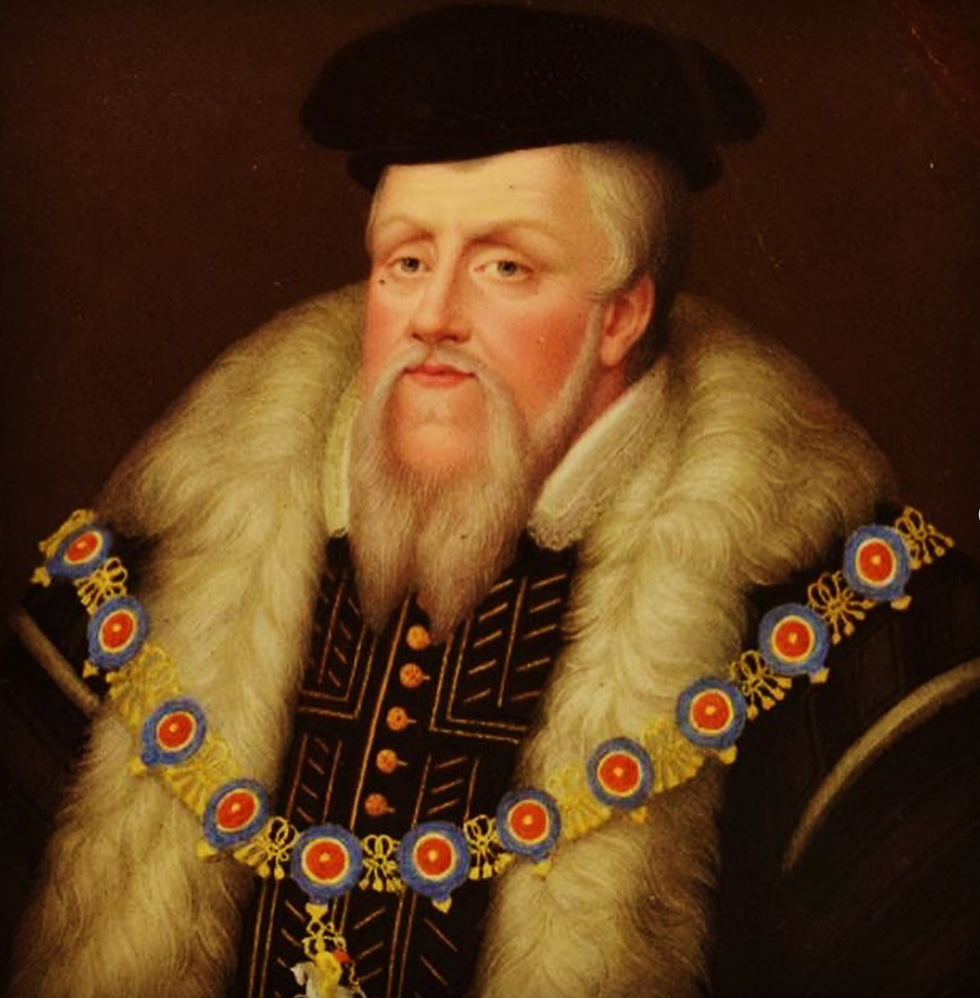
Bedford's will, written the year before his death in July 1585, set out requests for his funeral and internment. Despite remarrying four years after Margaret's death, in June 1566, he requested that "my bodie...to be buried in the parish church of Cheynes". Bedford's funeral was held with great pomp and ceremony in September 1585, following which he was interred amongst his ancestors, including his first wife Margaret. Bedford's second wife, Bridget Hussey, outlived her husband; she died sixteen years later in 1601, initially being interred at Watford, her remains were moved to Cheynes in the early 20th century when the Bedford Chapel was extended and renovated (Wiffin, 1833; Middlesex Heraldry Society, 2025).
See THE DUDLEY WOMEN POST: The Death and Funeral of Francis Russell, 2nd Earl of Bedford, 1585
![Tomb effigies of Margaret St John and Francis Russell, St Michael's Church, Chenies © NorfolkBoy1 [flickr]](https://static.wixstatic.com/media/ed9b82_3d02b3ab1bfa46f28f904510704b5da5~mv2.jpg/v1/fill/w_980,h_784,al_c,q_85,usm_0.66_1.00_0.01,enc_avif,quality_auto/ed9b82_3d02b3ab1bfa46f28f904510704b5da5~mv2.jpg)
More than half a century later after Bedford's death, the couple's grandson Francis Russell, then Baron Russell of Thornhaugh, and later the 4th Earl of Bedford, commissioned the erection of tombs within the Bedford Chapel dedicated to his beloved family members, including to Margaret and Francis. Their colourful marble and alabaster tomb is surrounded by symbols associated with the couple's noble ancestries, including the goat and yale, and is adorned with nine heraldic shields and inscriptions celebrating the births and marriages of their seven children, including their eldest daughter Anne, Countess of Warwick, who also had a monument erected in her honour. A large heraldic shield, of Russell impaled with St John, sits of the head of the monument, inscribed with the date of its commission: '1619'. The tomb is topped with matching effigies of the couple, lying in a supine position, their eyes gazing upwards, their hands joined together in prayer. The tombs have been attributed to William Cure II, or 'The Younger', of the Cure Workshop in Southwark; at the time of these commissions, Cure was employed as the King's Master Mason (Middlesex Heraldry Society, 2025). On 28 July 1619, Russell's cousin, Lady Anne Clifford, a prolific diarist throughout her life, wrote that she had been informed of the plans for the monuments: "my Coz. Oldworth...shewed me those remembrances which are to be set up at Cheynes for my Great Grand Father of Bedford and my Grandfather of Bedford and my Aunt Warwick" (Clifford, 2003, p.83).


Comments