
The Marriage of Anne Russell and Ambrose Dudley - 11 November 1565
thedudleywomen
Nov 11, 2025
11 min read
Updated: Aug 8

On 11 November 1565, Ambrose Dudley, 3rd Earl of Warwick, the elder brother of Robert Dudley, 1st Earl of Leicester, was married for the third, and what would be his final time. For the twice-widowed Warwick, now in his mid-thirties, his new bride was the eldest daughter of Francis Russell, 2nd Earl of Bedford, and member of Elizabeth I's household: 15-year-old Lady Anne Russell.
By 1565, Warwick was the elder of only two surviving sons of the convicted and subsequently-executed former Lord President of Edward VI's Regency Council John Dudley, 1st Duke of Northumberland. Whilst both sons had also been convicted of treason and sentenced to death for their roles in the attempted coup in placing their in-law Lady Jane Grey on the English throne in July 1553, Warwick and Leicester had managed to re-establish their positions in court and society. Having both received pardons and being 'restored by blood' by Acts of Parliament passed during the reign of Mary I, the brothers were rewarded for their loyalty to Elizabeth on her accession to the throne in November 1558, Robert being appointed as 'Master of Horse' whilst the elder Ambrose being appointed to the senior position of 'Master of Ordnance', thereby being responsible for the country's military supplies and fortifications. Further military appointments followed, including his dispatch to France in October 1562, acting as the queen's Lieutenant-General, in support of the French Huguenots in 'The French Wars of Relgion'. It was during this time that Warwick sustained a gunshot wound to his leg, leaving him with long-term mobility issues, needing a stick to mobilise, which prevented further assignments abroad (Weir, 1999; Gristwood, 2007; Paul, 2022).

Warwick had been married twice previously; his first marriage had taken place by March 1546 to Anne Whorwood, the eldest daughter of William Whorwood, Henry VIII's Attorney General. Anne's wardship had passed to John Dudley, then Viscount Lisle, installed as a member of the king's Privy Council, following Whorwood's death in May 1545. At the time of this union, both bride and groom appear to have been minors, with their marriage likely designed to ensure Anne's inheritance remained within Dudley's control. Anne died in summer 1552, reportedly from sweating sickness, with the couple's only son John also perishing. Warwick's second marriage subsequently took place in spring 1553, to the older heiress Elizabeth Tailboys, 4th Baroness Tailboys of Kyme, just one of a series of political marriages in anticipation of an upcoming regime change. Elizabeth appears to have died during Warwick's tenure in France in 1563, leaving the eldest surviving member of the Dudley family once again widowed, and childless. However, two years prior to her death, Warwick appears to have abandoned his wife, with the couple residing at different properties, and never reconciling before her death, having also appeared to have suffered the emotional toil of a phantom pregnancy (Paul, 2022; History of Parliament, 2025).
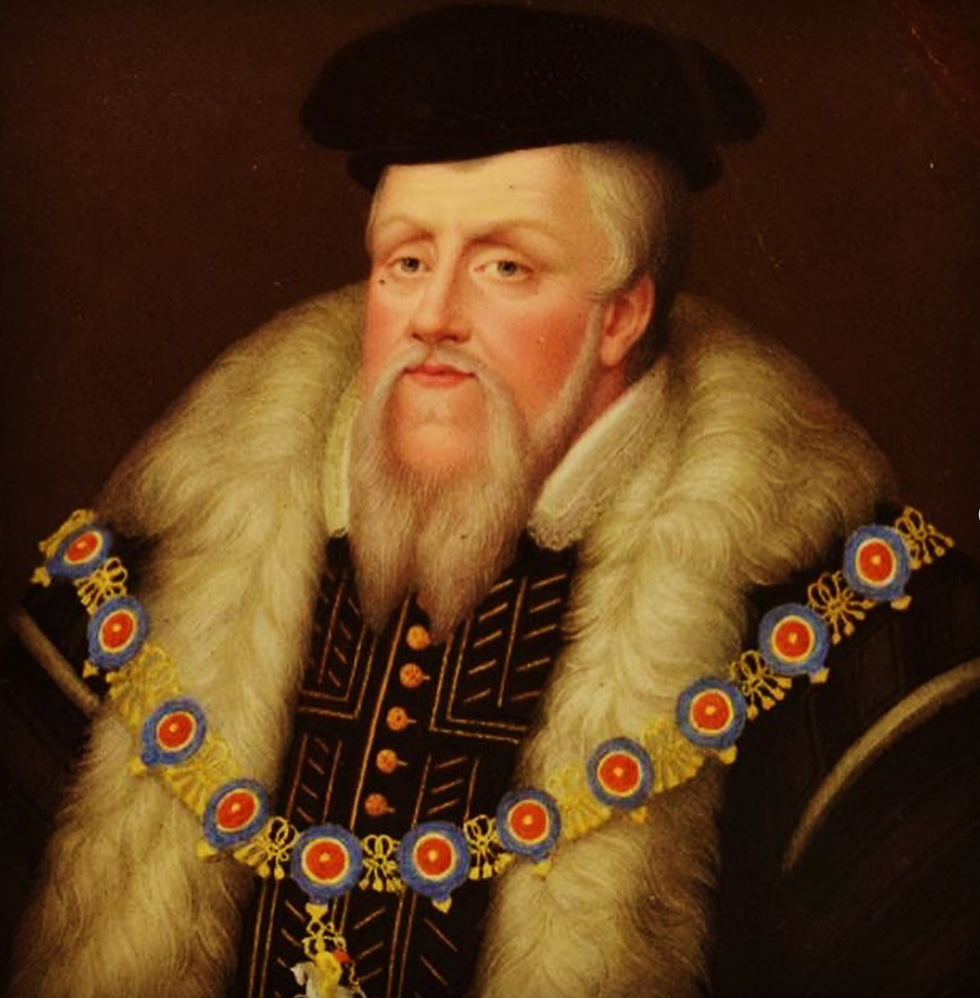
Since 1564, one of Elizabeth's trusted Privy Councillor's Francis Russell, 2nd Earl of Bedford, had been appointed as Governor of Berwick, England's most northern stronghold. In his capacity of Governor, Bedford was involved in the multiple diplomatic missions and negotiations that took place between Elizabeth's England and Mary, Queen of Scots, prior to her forced abdication in 1567. In 1565, the offer of a treaty of peace, by way of marriage to Leicester was still being discussed, despite reported reservations from the prospective groom. It was in relation to these negotiations which took and kept Bedford up north, after Easter 1565, in addition to an unsuccessful attempt to prevent the marriage between Mary and her second husband Henry Stuart, Lord Darnley, in July 1565 (Wiffin, 1833; Weir, 1991).
During this challenging tenure as Governor, Bedford remained in correspondence with others in Elizabeth's inner circle, including Leicester. Bedford had long been acquaintances of Warwick and Leicester, having served with them both at the Siege of St Quentin alongside Philip II of Spain in 1557, their fathers having both been one of the chosen 16 men to sit on Edward VI's Regency Council, The brothers also shared Bedford's Reformist views, in which they had been brought up in and educated, including the importance of Elizabeth in representing these across Europe. It was following negoitations between Bedford and Leicester that terms were reached for an agreed marriage between Bedford's eldest daughter Anne, and Warwick. Whilst he was almost twenty-years his intended bride's senior, and twice-widowed, Warwick was still deemed to be an desirable match: his reputation and favour with the queen remained high, and he continued to benefit from his brother's close relationship with their monarch (Wiffin, 1833; Wilson, 1981).

Anne appears to have joined Elizabeth's household shortly after her accession in 1559, aged only 10, joining her late-mother Margaret St John, Countess of Bedford, who had been appointed as a Lady of the Privy Chamber. Anne does not appear to have been officially appointed to the role of Maid of Honour, a position traditionally held by six unmarried young ladies of the household at one time, although found herself in the queen's service, possibly due to the Russell family's ability to avoid embroiling themselves in scandal (Borman, 2009; Whitelock, 2013; Folgerpedia [1], 2025). It was as a young woman at court, that Anne first drew the attention from admirers, described by Weir (1991, p.256) as having "been lauded by poets for her virgin grace, her genius and her charming voice".
Italian historian and poet, Pietro Bizzarri, who had been under the patronage of the earl for over a decade, and reportedly accompanied Bedford to Berwick, wrote a poem, dedicated in Anne in anticipation of her upcoming marriage, which was translated by Wiffin from the original Latin into English (1833, p.424-425):
TO THE LADY ANNE RUSSELL O quam feliciam poterit se dicere natum! [O, how fortunate he will be able to call himself born!] O to how blest a lot is he commended, Who, winning thee, with virtue will embrace A form like Helen's, by delight attended, And tender love, and every virgin grace, - Thee, o'er whose cheek ingenuous honour throws Her exquisitest rose? Though thine be genius, thou dost deign to cherish Genius with care - with many-language powers Reaping the spoils of deeds that ne'er shall perish, Speeding with lyre or lute the enchanted hours, Or broidering webs whose beauty well might dare Arachne to despair? Why should I say with what refined discreetness Thy converse teems? Why speak thy charming voice> Thy gaze- thy steps- they smile so full of sweetness - Or thrilling dance, if dancing be thy choice? Why speak of aught, when all thou say'st and dost Is beautiful and just? Rich is why dower indeed, beyond the glory Of gold, or gem - a dowry which we trace From both thy parents; for can British story Vaunt in its page a more illustrious race Than theirs, or one with equal sancitude Celestially endued? Like to a radiant star or spledent jewel, With every virtue clustering round her here, Thy mother shone - why did the Fates, too cruel, Snatch her so soon, so swiftly from her sphere, In the full lustre of her charms - the house Of her ascendant power? Methinks that Heaven behdl our valleys lighten With a resplendence too much like its own, And hendce transferred her to the skies, to brighten The happy hosts that gird the immortal throne; Where now, before her sheen the Pleiads fail, And Hesperus grows pale! Still lives they generous sire, by none transcended, Scarcely e'en equalled; whether at the call Of war he toils in arms, or rests attended By peace and wisdom in his happy hall Ye white-winged powers that prompt the poet's son, Guard well his virtues long! But blest, thrice blest, beyond a mortal's measure, With whom thy web, fair maid, must be enwove; Ah, may he prove like thee, and crown thy pleasure With the full luxury of concordant love! Come, Hymen, come, and with thy vestal flame The' auspicious hour proclaim! Come - for the summer fruit is ripe, and single She must no more remain; their hands unite, Their glowing hopes, their hearts, their homes commingle, - Birth, virtue, beauty, all await the rite, - Come! and erewhile may little footsteps shed Joy around her bridal bed!

Whilst Bedford remained in Berwick, his Westminster home, Bedford House, located on The Strand, was left vacant. It was this property that was prepared for the arrival of the heavily-pregnant Lady Cecilia of Sweden, sister of Erik XIV of Sweden, a potential marital prospect, in September 1565, with "hangings and beds belonging to the Queen" brought to dress the house. Cecilia arrived in London on 11 September, giving birth to her son only four days later, at Bedford House on 15 September. The queen made multiple visits to visit to her friend, with whom she had been in previous correspondence, later acting as godmother to her son Edward. This was welcome news to a grieving queen, coming only two months after the tragic death of Kat Ashley, Chief Gentlewoman of the Privy Chamber. On 14 October, celebrations took place at Bedford House, for Cecilia's 'Churching Day'; it was following the supper attended by the queen that a herald announced 'a challenge for a tournament' for Warwick's upcoming marriage: "at the tilt...at the tourney...and with swords at the barriers". The date was initially given for Sunday 04 November 1565, but it was delayed until the following week (Folgerpedia [2], 2025).

On Sunday 11 November 1565, the marriage ceremony finally took place between Warwick and his young bride. The chosen location was Whitehall Palace, at the heart of Westminster, the queen herself being in attendance, her presence thereby bestowing a great honour to both families. Whitelock (2013, p.102) described the ceremony as a "great court occasion, a coming together of two great protestant families at court", with the presence of multiple young people "represent[ing] a new generation, a new age and new promise" (Paul, 2022, p. 304). Anne, who had been "lying in court" prior to the ceremony, left her chamber in the courtier lodgings, and made her way to the palace's chapel, 'The Queen's Majesty's Great Closet', where the service took place. She was accompanied by the Edward de Vere, 17th Earl of Oxford, and Edward Manners, 3rd Earl of Rutland, in addition to 'noblemen' and 'lords', who entered the chapel before her. The bride was dressed in a kirtle of silver and blue, and a gown of silver-embroidered purple velvet, her head topped with a gold cowl. Anne's train was carried by Katherine Knollys, the 6-year-old daughter of Sir Francis Knollys, one of Elizabeth's Privy Councillors and Vice-Chamberlain of the Royal Household and his wife Catherine Carey, the queen's cousin, and one of her trusted Ladies of the Bedchamber. Following Anne and Katherine into the chapel were other gentlewomen, including the six Maids of Honour, unmarried women in the queen's household, dressed in gowns of yellow stain, adorned with green velvet and silver lace (Paul, 2022; Folgerpedia [2], 2025).
After Anne and the women were settled, the 'lords' left the chapel and went to collect Warwick from another chamber. Accompanied by Leicester, the brothers, dressed in gowns in purple velvet and silk embroidered with gold, were then led to the chapel. Finally, the selected lords, which included William Herbert, 1st Earl of Pembroke, collected Elizabeth from her chambers; following the queen's arrival, the ceremony commenced. In the absence of Bedford, whose responsibilities had kept him stationed at Berwick, Anne was 'given away' by Leicester. The ceremony was read from the 1559 'Book of Common Prayer', a revised text produced following Elizabeth's accession to the throne, and her reintroduction of protestant practices (Paul, 2022; Folgerpedia [2], 2025).

Following the completion of the religious ceremony, three days of celebrations now commenced. A wedding feast was held for the bridal party in the Council Chamber, which had been decorated with rich hangings of 'arras' or tapestries. The new Countess of Warwick presided over the feast, following which the party made their way outside, to continue the celebrations, the younger and fitter men of the court participating in the planned activities, the women and less-able spectating. Elizabeth remained indoors however, observing from the Queen's Gallery, along with Lady Cecilia of Sweden (Paul, 2022; Folgerpedia [2], 2025).
Three days of tournaments were then held in the tiltyards of Whitehall Palace; jousting and sword-fighting "at the tourney". 'Challengers' were met by 'defendants', which included Leicester, the latter group processioning from Durham Place, the Earl's nearby residence on The Strand. Warwick himself joined the tournament on the third day, as a challenger; his participation was brief, however, likely due to his ongoing mobility and pain. Once the 'jousts and tourneys' had been completed, Leicester hosted a 'great dinner' at Durham Place that evening, rounding up the celebrations, which had involved masques and dancing in the evening (Folgerpedia [2], 2025).
A tragic accident tempered the festivities on the first evening, when during celebratory gun fire across the Thames, in commemoration of Warwick's military position as Master of Ordnance, a piece of one of the chambers broke away, and instantly killed the queen's Master Gunner, Robert Thomas "to the great sorrow and lamentation of many". Thomas was buried "with considerable ceremony" two days later, on 13 November, at the church of St Botolph without Bishopsgate, located just outside London's city walls, as the wedding celebrations were drawing to a close (Paul, 2022; Folgerpedia [2], 2025).

![© The Dudley Women [taken Mar 2024 at St Mary's Church, Warwick]](https://static.wixstatic.com/media/ed9b82_e4351486541047c08c1c92cf4f2ba432~mv2.jpg/v1/fill/w_980,h_784,al_c,q_85,usm_0.66_1.00_0.01,enc_avif,quality_auto/ed9b82_e4351486541047c08c1c92cf4f2ba432~mv2.jpg)

Comments